
Leash Training
Leash Tips
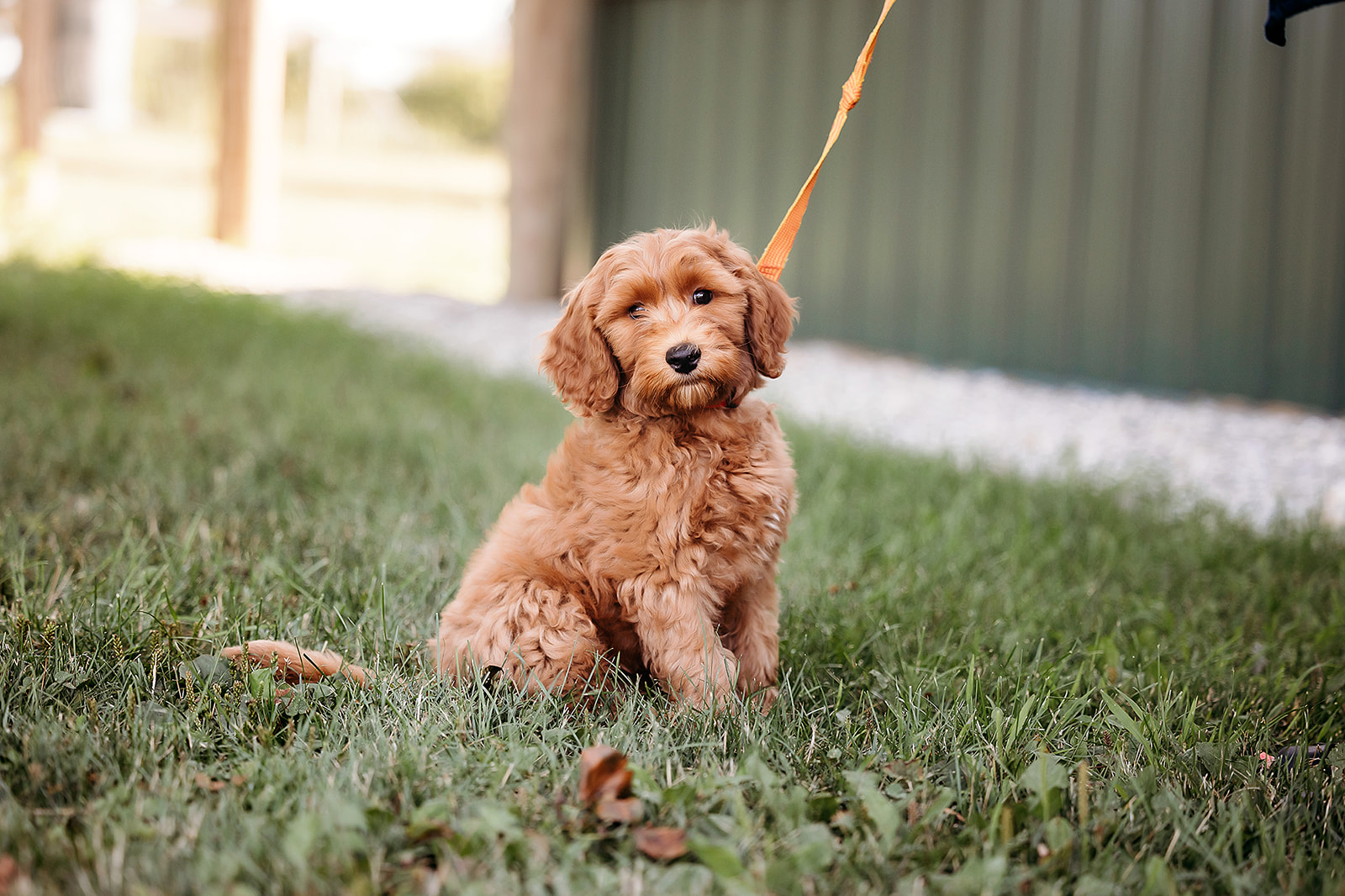
While an attention walk with your dog looking responsibly up at you is a great ideal, it takes time and a lot of practice. Many of us get a new puppy and think we need to start walking around the block right away. This may sound crazy to you, but wait. Walks are NOT necessary at such a young age. Play is more useful for exercise until leash skills are acquired.
First, we need to teach our puppy what a leash is, let alone how to navigate with one on. We choose a square area, then start taking a few steps, getting our puppy to follow us and rewarding them for doing so. Walking backwards in the beginning can help your puppy stay focused on you. Stay in this area and refrain from choosing a sidewalk, pathway, or other clear path for your puppy. We want them to follow you, not the path.
The next step is to pick up the leash and start moving together. We proceed to work as a team, moving from point A to B with no care about where we end up. We only start destination walks (around the block, to the park, and back) when our puppy has the skills needed to be successful. This often works out well, though, because our puppy is not yet vaccinated - so we use that time to teach basic leash skills, then when they are fully immunized, we can start more formal leash training. Walk in circles and figure eights - changing directions often helps your puppy stay engaged and focused on you.
A leash, basic flat collar or harness, and yummy food rewards are all you need to get started. Begin in your home in a quiet room. Walk around furniture, in and out of every room, and up and down hallways. Next, take it outside on a patio or driveway - free from smelly grass, tempting bark, and blowing leaves if possible! You know what I’m talking about, don’t you? We teach our dogs to give in to the slightest amount of leash tension and review this concept often at the start of every leash training session. If your dog pulls, the brakes go on. Try to anticipate when your dog will pull the leash tight and change direction before it happens. That is where the circles and figure eights come in! I say, “Let’s go,” before changing directions to cue my dog to pay attention. Something is about to happen. Reward them as they then follow you the other way.
I know it seems like a while before you’ll be out and about, going on a walk together, but trust me on this one. Put in the time at the beginning by doing the small, simple things over and over again, teaching your puppy to follow you. This time pays off big time, and soon enough, you’ll have a dog who walks beautifully on leash.
About CVL
Colonial Village Labradoodles is Indiana's premier labradoodle breeder. We raise multi-generational Australian Labradoodle and Australian Bernedoodle puppies with a purpose. Our dogs are bred for their therapy-oriented temperaments and allergy-friendly coats.
What is a multi-generational Australian Labradoodle?
Multi-generational Australian Labradoodles are a cross between many different parent breeds. The breed originated in Australia in the 1980s with the intent of creating an allergy-friendly service dog for the blind. Australian Labradoodles are a combination of a Poodle, Labrador Retriever, English Cocker Spaniel, American Cocker Spaniel, and Irish Water dogs. These breeds were hand-selected for specific breed qualities to create the ideal service dog for those with allergies. Since then, the breed has continued on and spread across the world. Australian Labradoodles are now considered their own breed with its own breed clubs (ALAA and WALA).